
Professional Duct Sealing in Baltimore, MD
Licensed & insured insulation + HVAC contractors
Serving Baltimore City & Baltimore County since 2006
Same-day energy audits — we diagnose first
800+ energy-efficient homes in Baltimore
5.0
Based on Google, Facebook & BBB Reviews

Get Your Estimate
Enter your information below





Reviews
Trusted by Baltimore Homeowners
Posted onTrustindex verifies that the original source of the review is Google. Bob came to inspect the house, carefully evaluated what had to be done and explained us in detail the work that he would do. He then send us a very reasonable estimate and came to do the work soon after. He was very kind throughout the process and even offered to work around the nap time of our daughter not to make too much noise. He completed the work in half a day with his helper that also left the area clean and tidy. We would recommend Bob for great insulation work at a good price!Posted onTrustindex verifies that the original source of the review is Google. They did a good job in insulation and good customer service.Posted onTrustindex verifies that the original source of the review is Google. I have used Bob and his team on two separate instances for two different properties, and both times they were able to quickly identify my issues and help remediate them! Most recently, my fiancé and I moved into a 1900s renovated home. Upon moving in, we quickly noticed that we were FREEZING all the time, even when cranking the heat. Bob and his team came and performed a full audit of the home and discovered there was absolutely no insulation on our third floor. They also gave us some other very helpful tips on how to save energy in our home. I would recommend anyone who owns property to have Bob and his team come at the very least do an audit at your property, as we ended up saving tons of money on our energy bills after using his services. It is definitely worth it, especially if you have an older home or have been noticing high bills.Posted onTrustindex verifies that the original source of the review is Google. Got my attic insulated last February. H.E.L.P. did an excellent job. I could immediately see the difference in my energy bill, and the comfort in my home. I highly recommend them.Posted onTrustindex verifies that the original source of the review is Google. They insulated my (absolutely no insulation upon move-in) flat roof at a reasonable price! Bob and Mike came to assess/quote and Mike was super friendly and knowledgeable at installation!Posted onTrustindex verifies that the original source of the review is Google. HELP was a huge help for us. We are new homeowners and we were shocked at our high gas bills during our first winter in the house. After researching online, we signed up for the BGE home energy audit (costs $100 and includes a lot of free stuff as part of the audit. There is zero reason not to do it if you are at all concerned about the weatherproofing in your home). Bob from HELP came out to perform our audit, which revealed the existence of several massive connections between the attic and our basement, which essentially caused our basement to constantly suck cold air in from the outside, forcing our furnace to work overtime. Bob walked us through his proposal and quote as well as the BGE rebate process, and was able to secure a really high rebate for us. Mike and Joe came out to do the actual insulating and sealing work, and they were polite, diligent, and thorough throughout. I can’t say enough positive things about the HELP team and I highly highly recommend both HELP and the BGE Energy Audit program.Posted onTrustindex verifies that the original source of the review is Google. After getting a horrific energy bill on a recently renovated house in Arbutus, I called HELP and Bob came by and completely insulated the home, made things more energy efficient, and educated us along the way! Just received our energy bill and we think Bob is a rock star! Thank you!Posted onTrustindex verifies that the original source of the review is Google. I had my house attic and garage insulated along with some other energy efficiency updates and I can't say enough good things about H.E.L.P. After enduring adverse temperature extremes and paying out very high electric and gas bills for two years I am so glad to have made the investment to get the issues fixed. Thanks again Bob!
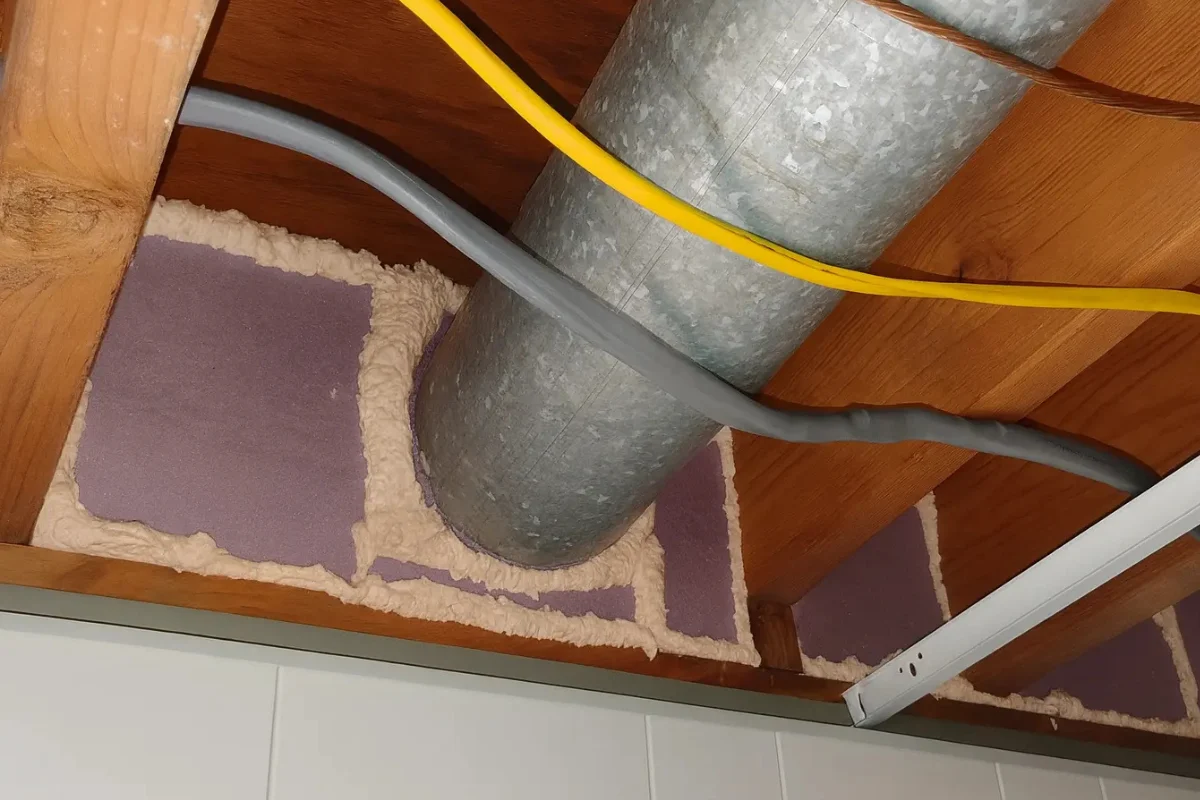
How Duct Sealing Fixes Air Leaks in Baltimore Homes
Leaky ducts let air escape before it gets to your rooms. We crawl into basements and attics every day, and the damage we find is often worse than homeowners expect. Gaps at joints, holes in duct walls, and loose sections send heated or cooled air into spaces you’re not trying to condition. Your second floor stays hot in summer while your system pumps cold air into your attic. Your kids’ bedrooms stay cold in winter while warm air leaks into your crawl space.
Duct sealing closes those gaps with materials designed for the job. We use mastic or Aeroseal depending on your home’s layout. The sealant fills cracks and covers seams so air stays inside the ducts from your furnace all the way to each room. Once we seal your ducts, every room finally gets the airflow it deserves.
Here’s what we tell every homeowner: Baltimore summers get hot and sticky while winters drop below freezing. That’s tough on any HVAC system, but leaky ducts make it impossible. Your air conditioner runs longer when cool air leaks into a sweltering attic that hits 130 degrees in July. Your furnace burns more fuel when warm air escapes into a cold crawl space during a nor’easter. We’ve seen BGE bills drop by $40 to $80 per month after sealing ducts. That’s real money back in your pocket.
Get Your Estimate
Enter your information below
process
Signs Your Baltimore Home Needs Duct Sealing
High energy bills without a clear cause often point to duct leaks. If your BGE bill climbs but your thermostat settings stay the same, air is likely escaping before it reaches your rooms. You’ll also notice rooms that never reach the right temperature no matter how long your system runs.
Dusty air is another sign. Leaky ducts pull in dust, insulation fibers, and allergens from attics and crawl spaces. That contaminated air flows through your vents and settles on furniture. If you clean regularly but dust builds up fast, your ducts may be pulling in debris from unconditioned spaces.
Listen for whistling or hissing near vents, registers, or ductwork in your basement. Those sounds mean air is forcing its way through gaps under pressure. Homes built before 1980 in neighborhoods like Fell’s Point or Bolton Hill often have unsealed metal ducts in basements or crawl spaces prone to rust and gaps. If your ducts run through a crawl space, you may also need crawl space insulation to prevent energy loss. Recognizing these symptoms early prevents wasted energy and expensive HVAC repairs down the line.
Aeroseal vs. Mastic: Which Duct Sealing Method Works Best
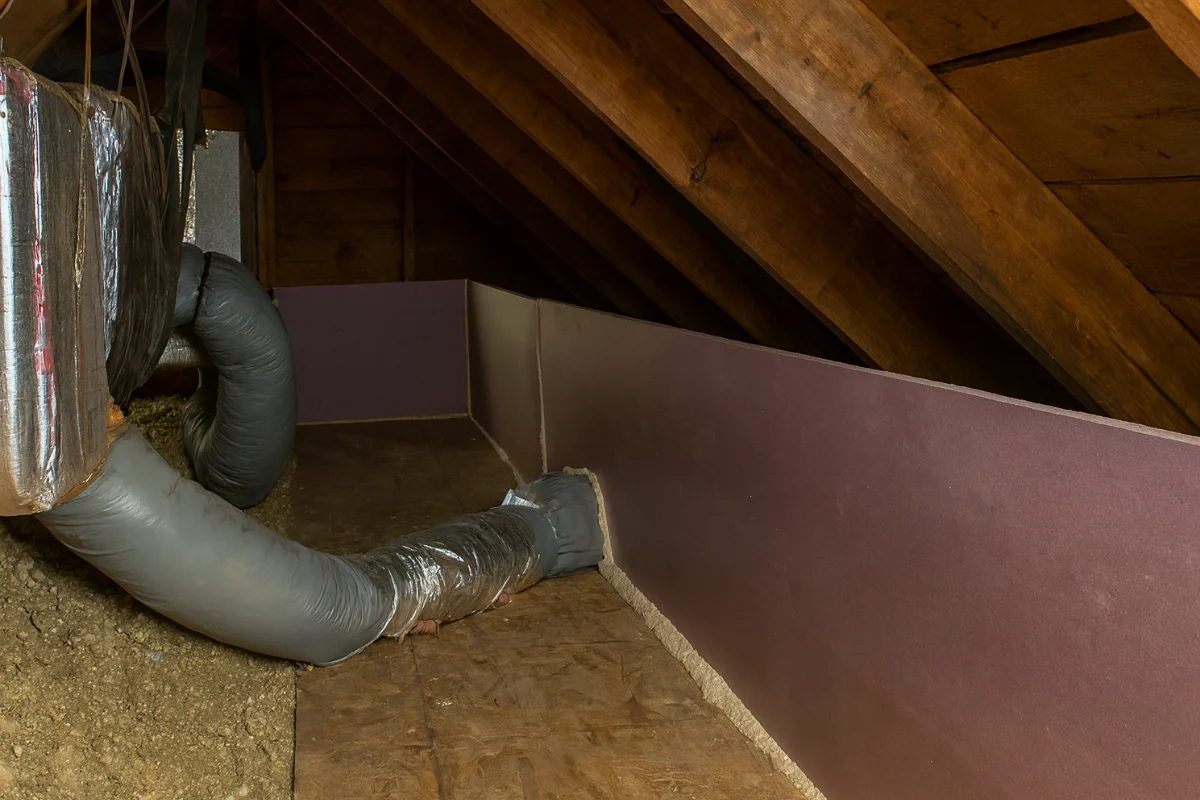
We use both methods depending on what your home needs. Mastic sealant is a thick paste we apply by hand to duct joints and seams. It looks like a gray putty, and we brush or trowel it onto every gap we can reach. Mastic dries hard over 24 hours and creates a permanent seal. We prefer mastic when ducts are accessible in basements or unfinished attics because we can see exactly what we’re sealing.
Aeroseal changed the game for homes where we can’t reach the ducts. It’s a spray polymer we blow through your entire duct system from the inside. We block off all your vents, pressurize the system, and let the Aeroseal find the leaks on its own. The particles stick to the edges of gaps and build up until each hole is plugged. The technology gives us a computer readout showing exactly how much leakage we sealed.
Here’s our honest take: Aeroseal costs more upfront, but it’s worth every penny for rowhomes. The tight crawl spaces under Canton and Federal Hill rowhomes make hand-sealing nearly impossible. We’ve squeezed into 18-inch crawl spaces where you can barely turn your head, and there’s just no way to reach every duct joint with mastic. Aeroseal handles that problem.
For Catonsville or Towson single-family homes with full basements and good duct access, mastic saves you money and works just as well. Both methods last 10 to 15 years when applied correctly. We’ll walk your home and tell you which method makes sense for your situation and budget. No upselling, just honest advice based on what we see in your basement or crawl space.
insulation
What Happens During a Professional Duct Sealing Appointment
We start with a visual inspection of your duct system. Our technician checks for obvious gaps, disconnected sections, and damaged duct material in your basement, attic, or crawl space. We also run a blower door test to measure how much air leaks out before sealing begins. This gives us a baseline to compare against after the work is done.
Next, we prepare your home. We move furniture away from vents if needed and cover floors near work areas. If we’re using Aeroseal, we seal off all registers with foam blocks so the material stays inside your ducts. If we’re using mastic, we clean duct surfaces to remove dust and grease so the sealant bonds properly.
During sealing, we apply mastic by hand to each visible leak or run Aeroseal through your system for 2 to 4 hours. Once the sealant cures, we run a final blower door test to confirm leaks are sealed. Most Baltimore appointments take 3 to 5 hours depending on system size and whether ducts run through finished or unfinished spaces. You’ll receive a report showing before-and-after leakage rates and estimated energy savings. As a licensed insulation contractor in Baltimore, MD, we handle all aspects of your home’s energy efficiency. Knowing the steps reduces surprises and helps you prepare your home for the crew.
ATTIC TYPES
How Sealed Ducts Lower Heating and Cooling Costs in Baltimore
Here’s the math that matters to you. When 20% to 30% of your conditioned air escapes through duct leaks, your HVAC system runs way longer than it should to hit the temperature on your thermostat. Every extra minute your system runs costs you money on your BGE bill.
Sealed ducts flip that equation. More air reaches your rooms with less waste. Your system hits your target temperature faster and shuts off sooner. Less runtime means less fuel burned when a cold front moves through in winter and less electricity used during those brutal August heat waves when the heat index hits 105.
According to ENERGY STAR, leaky ducts can cut system efficiency by as much as 20%. We’ve tracked customer bills before and after duct sealing, and the savings are real. A typical 1,800-square-foot rowhome in Canton might see BGE bills drop from $180 to $130 in July. A 2,500-square-foot single-family home in Towson might see winter gas bills drop from $220 to $160 in January.
Baltimore runs heating and cooling nearly year-round, so these savings add up fast. You need AC from May through September when humidity off the harbor makes everything sticky. You need heat from October through April when temperatures drop and wind whips off the bay. That’s 8 to 9 months where leaky ducts bleed money.
Our honest opinion after years of doing this work: duct sealing pays for itself faster than almost any other home improvement. New windows cost $10,000 and might save you $30 a month. Duct sealing costs a fraction of that and often saves you $50 to $80 a month immediately. The ROI just makes sense.
Featured Snippet Target
How is duct sealing done in Baltimore, MD?
- Worker checks ducts with a pressure test to find leaks.
- Access points are sealed off to isolate the duct system.
- Mastic sealant or Aeroseal spray is applied to gaps and joints.
- A blower door test measures airflow improvement.
- Final check confirms all leaks are sealed and ducts meet code.
- Homeowner gets a report showing BGE energy savings.
Duct Maintenance Tips to Keep Seals Lasting Longer
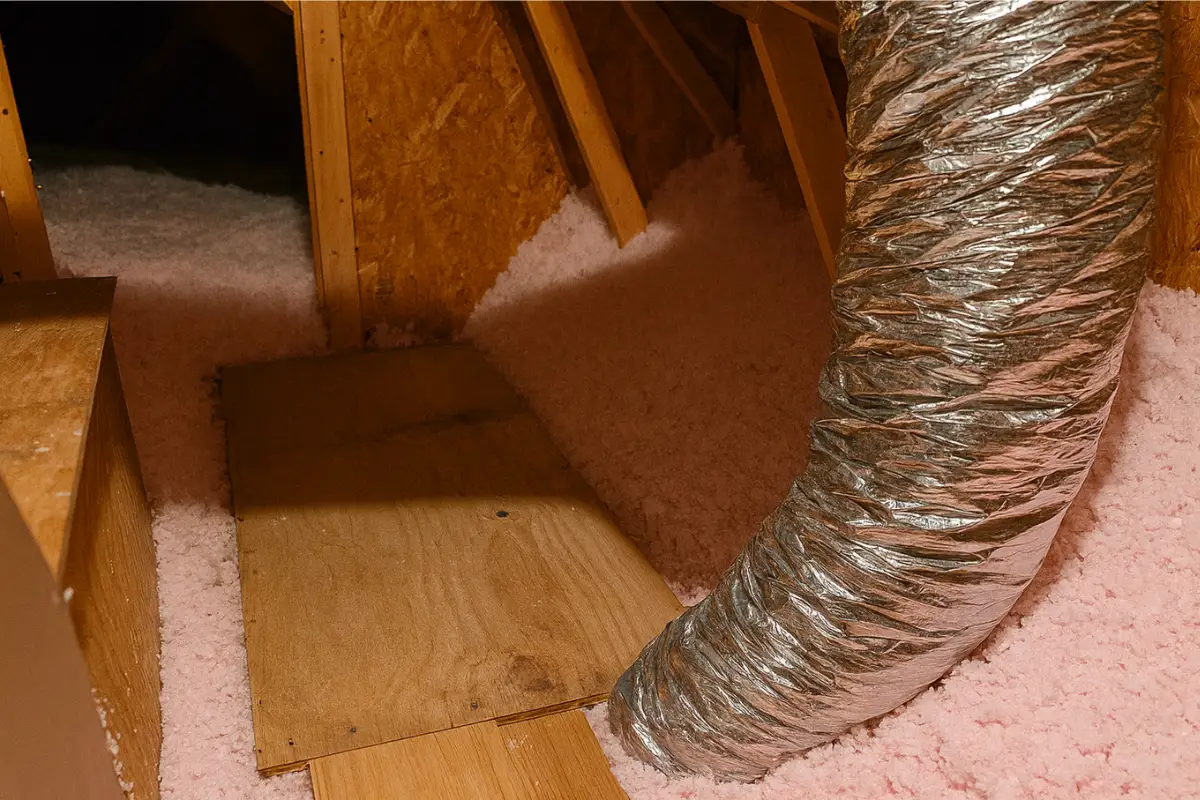
We want your sealed ducts to last 15 years or more, so here’s what we recommend based on real-world experience. First, change your HVAC filter every 1 to 3 months depending on how much you run your system. A clogged filter chokes airflow and creates pressure that stresses duct seams. We’ve seen brand-new seals fail within a year because the homeowner never changed their filter. Don’t let that be you.
Second, check visible ductwork in your basement or attic once a year. You don’t need special tools. Just look for new gaps at joints, sagging sections, or spots where mastic has cracked. Baltimore’s humid summers can crack mastic over time, especially if your attic hits 130 degrees and your insulation is thin. Catch small problems early before they turn into big leaks.
Third, get an HVAC tune-up every spring and fall. Your technician will inspect ductwork during the service call and catch issues before summer humidity or winter cold fronts put stress on your system. This is preventive maintenance that saves you money long-term.
One more thing we always mention: keep your attic insulation in good shape. Poor attic insulation lets heat build up, which softens mastic and damages flex duct. If you notice your attic feels like an oven in July, call us to check your insulation levels. Often, adding attic insulation and sealing ducts at the same time gives you the best bang for your buck.
Simple yearly checks prevent new leaks and protect the investment you made in sealed ducts. We’re here if you need us, but our goal is for you to never have to call us back for the same problem.
Get Your Estimate
Enter your information below
- Done Right
- Done Legit
- Maximum Savings
- Done Right
- Done Legit
- Maximum Savings
faq
FAQs
About Insulation & HVAC Services in
Baltimore
1. How long does duct sealing take in a Baltimore home?
2. Will duct sealing reduce dust in my Baltimore home?
3. Do I need to replace insulation after duct sealing?
4. How often should ducts be inspected in Baltimore?
5. Can duct sealing fix rooms that are too hot or too cold?
6. Should I insulate the attic floor or roof deck in Baltimore?
service areas
Your Local Insulation & HVAC Experts in Baltimore
Serving homeowners across Baltimore, BGE, PEPCO & DELMARVA territories since 2006 with honest energy solutions.
Ready to Lower Your Energy Bills?
- Done Right
- Done Legit
- Maximum Savings
- Done Right
- Done Legit
- Maximum Savings